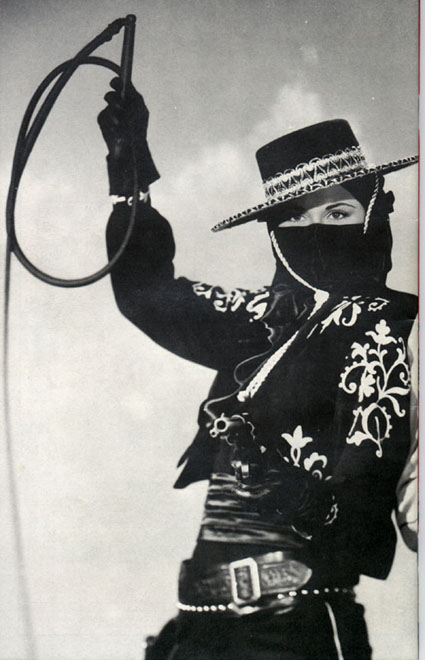
Linda Stirling Unmasked: The Black Whip


AGORA
: Dragged from her chariot by a mob of fanatical vigilante Christian monks, the revered astronomer was stripped naked, skinned to her bones with sharp oyster shells, stoned and burned alive as possibly the first executed witch in history. A kind of purge that was apparently big business back then.


CRITICAL WOMEN HEADLINES

2/19/15

All The Wilderness Review: An Intimate Voyage Into Sound, Sorrow And Solitude


By Kaneisha Montague

All the Wilderness simply put, is a remarkable piece of art in every form. The film managed to create a musical beauty behind an intimate topic. A refreshing take on the subject of death; All the Wilderness explores the effect on a family after the passing of a father. There’s a nostalgic feel to this 2015 film, it reignites the importance of sound, and the film is artistically cradled by music. The actors’ commentary is simply complimentary; an art in silent films that other films may find difficult to capture. The scratches of James’ record player spinning old classical music are made important. Every sound is made more present than we are used to experiencing. The previous in it-self, set the tone for a film that gave a redefined meaning to noise.

Carl Sandburg’s poem “Wilderness” plays a pivotal role in the connection between the tales of the wilderness that James’ father used to tell him about and the coming to terms with James’ lost and acceptance of himself. “Each man’s wilderness is his own” his dad used to say.

Leaving behind a wife Abigail Charm (Virginia Madsen) and a coming-of-age son James Charm (Kodi Smit-McPhee), only the mother has seemed to begin to move past the tragedy but she believes her son has not “socially adjusted”. James becomes obsessed with death; documenting the death of everything/everyone around him; from house flies, to birds to his pet hamster Elliott. He worries his mother beyond the point of control, leaving her no choice but to take him to a shrink. James reluctantly attends his sessions with no desire of ever leaving his sarcasm at the door or give way for the doctor to explore his suppressed feelings.

As all coming of age films, a love interest is introduced, there in the shrink’s waiting room, we meet Val. The counterpart to what we have come to know of James; sarcastic and scarred from the past. Val opens up to James about her attempting to commit suicide after the divorce of her parents when she was 11. James fills Val in on the passing of his father. The two bond beyond romantic attraction. Along with his love interest, James meets two street kids Harmon (Evan Ross) and Gunny (Hannah Barefoot) who push him out of his shell and allow him to finally live and experience a more enjoyable type of darkness; alcohol, smoking, late nights, friends etc. James becomes destructive and disrespectful towards his mother, driving a rift between their already corrupted relationship.

Harmon’s friendship with James, we begin to notice, is equally beneficial. Harmon, a secret pianist, lets James into his musical world, which in turn sets Harmon free just as Harmon does for James. The two are torn apart when Harmon is caught kissing Val. Upset and confused, James returns to the shell of himself. Almost as if he’d witnessed death twice. With nowhere else to release, he finally confides in his shrink who then reveals that he himself knew of James’ father before he died. James is shocked by the fact that the shrink also adds that James is nothing like his father.

The film silently withholds the fact that James’ father committed suicide by jumping off of a city bridge. What’s even more chilling is James finally admitting to his mother that he witnessed the entire scene. James revisits the bridge and has finally come to the point in his journey where he is ready to accept and carry his father’s “wilderness”. “I keep this wolf because the wilderness gave it to me.”

This riveting, must-see coming of age film with a musical twist on the intimate subject of suicide is well worth the watch. Indulge.

Kaneisha Montague is a filmmaker based in Metro Atlanta. She is a member of the Women Film Critics Circle.

2/11/15

Girlhood: Journey Stripped Of Culture And Unique Experience


By Kaneisha Montague

Celine Sciamma’s "Bande De Filles" or "Girlhood" is an enduring but troubling coming of age film. Ironically released along the same time as the popular, longitudinal coming of age film "Boyhood" the two are far from similar. Marieme (Karidja Toure) stars as the young French girl of African descent, struggling to find her footing. The opening scene of two all-girl football teams playing against each other followed by a group walk home and separation, leads the viewer to believe the story is in fact about the comaraderie of this Band of Girls/ Girl Gang. Marieme, once separated from her friends during the walk home, immediately entraps us within her separate world. We are then introduced to her love interest, and the several dynamics of her single parent home. It appears as though Marieme is the eldest girl sibling, while her older brother has assumed the position of father and strikes fear into his younger sisters. Marieme’s mother is out of the house throughout the majority of the film, working as a janitor and forcing Marieme to be the caretaker of the house and the eye of admiration for her younger sister.

While attempting to find her footing, Sciamma brings us to a pivotal point in Marieme’s life. Complications with grades push Marieme into her only other option; vocational school. While upset with the path she must take, she simultaneously meets a group of troubled girls that consider themselves bullies. When accepted with open arms, Marieme takes a turn for the worst and begins to mirror the personality and acts of the group leader. From fights, to drug distribution, to prostitution, the main character shifts the term "Girl Gang" or "Band of Girls" to a more literal definition of the phrase. Marieme lives in careless moments, and fully invests in pockets of happiness that she shares with her new "Girl Gang." Though we can clearly see that Marieme has accepted her new troubled life, a lot of moments are left empty and unfulfilled. The viewer can assume and anticipate the outcome of a scene, but Sciamma neither brings scenes to complete fruition nor provides them with closure. Intimate scenes are bare of true emotion. Emotional connections are acted out, but not translated well enough for the viewer to feel it.

Though attempting to be relatable, the film strips just about every aspect of culture and unique experience from the audience to enjoy. Marieme speaks French and her family appears to be of African descent, we can only assume and therefore an opaque understanding of time and place is created. Americanized music, clothing and conversations prevent the viewer from truly journeying with the main character. Sciamma’s approach on translating this idea of "Girlhood" is smothered by modernized scenes and an overly commercialized storyline.

It would have been great to see what “Girlhood” truly means and feels like for a French speaking young woman of African descent.

Kaneisha Montague is a filmmaker based in Metro Atlanta. She is a member of the Women Film Critics Circle.

2/7/15

The Berlin Film Festival Report 2015

WFCC Member Tar Karajica Covers Berlin 2015 For Variety


Continue To Read Coverage Here


Tara Karajica writes for Variety, Screen International, Festivalists and The Film Prospector. She is a member of The Women Film Critics Circle.

1/20/15

Dissing DuVernay: The Lessons Of Selma


By Sikivu Hutchinson 

Quote of the Day - John Lithgow - "Time sneaks up on you like a windshield on a bug."

Every child in the U.S. should be required to see Selma for at least two reasons. First, Ava DuVernay’s powerhouse film captures the political complexities and tactical ambiguities that informed civil rights movement organizing; from the behind-the-scenes factionalism among movement organizers to the FBI’s war on activists to the media’s influence on bringing black resistance to Southern terrorism straight into white Middle America’s living rooms. Highlighting the contributions of black women activists and other lesser known unheralded organizers, the film reminds young people that historical change does not spring from the exceptional actions of visionary individuals but from collective action. In this regard, Selma is an important antidote to mainstream portrayals that fixate on Martin Luther King as the sole impetus for the movement.

Second, the lessons of Selma itself are relevant to DuVernay’s “omission” from the Academy Awards nomination for Best Director. True to Frederick Douglass’ assertion that “power concedes nothing without demand” the snub of DuVernay is criminal but of course not unprecedented. Just as sustained organized action brought down Southern apartheid so must sustained organized action be directed at Hollywood’s billion dollar White Boy’s club. Each year, people of color flock to inane comedies and big budget action flicks in record numbers (Latinos have the highest film going rates and the lowest rates of representation in mainstream film). In the few theater chains that deign to operate in , we watch white people play out themes of heroism, romance, swashbuckling, leadership and political intrigue underwritten by multinational corporations which rarely endorse people of color portrayals that don’t hinge on minstrelsy. Given this, why would the Academy, helmed by a cabal of older white men like the Tea Party, give a brilliant fierce black woman like DuVernay its imprimatur for disrupting one of white supremacy’s most sacred preserves? Shaming white Hollywood into “validating” a few token nominees of color every five years does nothing to address its apartheid structure; refusing to support its lily white fantasies at the local multiplex does.

In Selma, DuVernay alludes to the limits of dismantling de jure segregation vis-à-vis de facto segregation. Toward the end of his life, King confronted economic injustice and the intractability of capitalist exploitation. Moving from “reform to revolution”, his final push for the Poor People’s Campaign underscored the divide between ending Jim Crow voting rights restrictions versus redressing deeply embedded structural race and class inequities. In some respects, DuVernay’s exclusion from the film industry’s white male director canon exemplifies the elusiveness of the latter. While white Hollywood post-Charlie Hebdo recently patted itself on the back at the Golden Globes for supporting free speech and the increase in diverse portrayals of (white) women, conditions for women of color are still in neo-Aunt Jemima territory. Critiquing this civil liberties’ love fest, black feminist writer Britney Cooper slammed white Hollywood’s empty activist rhetoric as it ignored the Black Lives Matter movement...

CONTINUE READING ARTICLE HERE

Sikivu Hutchinson is the editor of Blackfemlens.org, and she is a commentator on Pacifica's KPFK Radio in Los Angeles. Sikivu is a member of The Women Film Critics Circle.

1/16/15

Oscar Noms 2014: WFCC Members Weigh In - Where Are All The Women?

Claudia Puig, Film Critic at USA Today:
We still have a very long way to go in terms of parity between the genders, and, of course, among different cultures and races in Hollywood, just as we do as a country. When I didn't see Ava DuVernay's name among the best director nominees, my heart sank. Her nomination would have gone a long way to inspire young women, and especially young women of color, to pursue filmmaking as a career. I was truly hoping not only to see a woman burst into the all-boys club, but an African-American woman. That would have indicated some progress in a male-dominated industry. When Kathryn Bigelow became the first woman to win a best director Oscar in 2009 for The Hurt Locker it felt like perhaps Hollywood was stepping up and opening the doors to its inner sanctum. But that was 6 years ago. I hate to think of her as the token female director Oscar winner.

Having said that, I was heartened to see that Selma was among the best picture nominees. Perhaps fellow directors did not think DuVernay was enough of a seasoned veteran to make it into the elite ranks of director nominees? In general, women behind the camera are given short shrift in Hollywood, so it's not very surprising that they account for a small minority of the overall Oscar nominees in categories like writing, directing and editing. Their presence behind the camera in mainstream films is more rare than in the independent film world, so that accounts for why more creative women pursue the indie avenue, or go into television.


Thelma Adams, Film Editor at ZEALnyc: 
First of all, I welcome more voices to the discussion. Only a few years ago, we women bothered by the bias in Hollywood and at the Oscars were howling more or less alone. Now, the status of women in Hollywood, and the imbalance of the Awards has become a common topic. While we can decry the snub of Ava DuVernay as a Best Director nominee, even as her movie Selma got its rightful place among the Best Picture nominees. Another thing that strikes me is the Best Actor and Actress categories. There has been a lot of talk about the weakness in the potential actress nominees and the incredibly competitive actor category. This is totally symptomatic, not of actors being superior but of male actors having better opportunities and more challenging roles.

If the two categories merged into one, the men would dominate. Perhaps Julianne Moore and Marion Cotillard would compete this year but who knows. So, Amy Adams and Jennifer Aniston fell off the nominees but each and every one of the male contenders -- Benedict Cumberbatch, Bradley Cooper, Steve Carell, Eddie Redmayne and Michael Keaton -- deserve to be feted. So many were left out: Ralph Fiennes, Tom Hardy, David Oyelowo to name just three. This is not a measure of acting talent, male versus female, but a chasm in opportunity. More leading roles for women where they get to carry the narrative will result in a more muscular and competitive Best Actress race.

Continue To Read Article Here