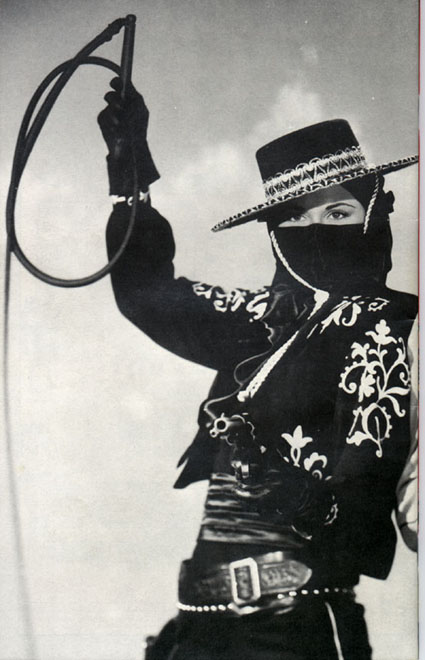
Linda Stirling Unmasked: The Black Whip


AGORA
: Dragged from her chariot by a mob of fanatical vigilante Christian monks, the revered astronomer was stripped naked, skinned to her bones with sharp oyster shells, stoned and burned alive as possibly the first executed witch in history. A kind of purge that was apparently big business back then.


CRITICAL WOMEN HEADLINES

1/8/09

The Women Film Critics Circle Awards 2008 Ceremony


DISFIGURED

The Women Film Critics Circle held their annual Awards Ceremony on January 8th. The Ceremony was broadcast live on WBAI Radio, with WFCC members, award winners and guests.

TO LISTEN TO THE SHOW, CLICK HERE

The Women Film Critics Circle is an association of 46 women film critics and scholars from around the country, who are involved in print, radio, online and TV broadcast media. They came together five years ago to form the first women critics organization ever in the country, in the belief that women’s perspectives and voices in film criticism need to be recognized fully. WFCC also prides itself on being the most culturally and racially diverse critics group in the country by far, and best reflecting the diversity of movie audiences.

THE WOMEN FILM CRITICS CIRCLE AWARDS 2008

BEST MOVIE ABOUT WOMEN

Changeling

BEST MOVIE BY A WOMAN
Frozen River

BEST STORYTELLER [Screenwriting Award]
Jennifer Lumet: Rachel Getting Married

BEST ACTRESS
Melissa Leo: Frozen River

BEST ACTOR
Mickey Rourke: The Wrestler

BEST YOUNG ACTRESS

Abigail Breslin: Kit Kittredge and Definitely Maybe

BEST COMEDIC ACTRESS: *TIE*
Sally Hawkins: Happy-Go-Lucky
Meryl Streep: Mamma Mia!

BEST FOREIGN FILM
I've Loved You So Long

BEST FEMALE IMAGES IN A MOVIE
The Secret Life Of Bees

BEST UNRELEASED MOVIE
How The Garcia Girls Spent Their Summer

BEST EQUALITY OF THE SEXES
Nothing But The Truth

BEST MUSIC

Cadillac Records

BEST ANIMATED FEMALE

Eve: WALL-E

BEST FAMILY FILM

WALL-E

LIFETIME ACHIEVEMENT AWARD

Meryl Streep

ACTING AND ACTIVISM
: Natalie Portman

**ADRIENNE SHELLY AWARD: For a film that most passionately opposes violence against women:
Changeling

**JOSEPHINE BAKER AWARD: For best expressing the woman of color experience in America:
Ballast

**KAREN MORLEY AWARD: For best exemplifying a woman’s place in history or society, and a courageous search for identity:
Battle In Seattle

COURAGE IN ACTING
:
Deidra Edwards in DisFigured: For redefining conventional standards of female physical beauty and pride on screen, and promoting positive images of big bodied women.

BEST DOCUMENTARIES:

GROUNDBREAKER:
A Walk To Beautiful: Mary Olive Smith

ABOVE AND BEYOND:
Wings Of Defeat: Risa Morimoto

COURAGE IN FILMMAKING
:
Traces Of The Trade: Katrina Browne

MOST OFFENSIVE MALE CHARACTERS

Choke: Sam Rockwell's lewd leading man sexaholic Victor, may be the first on screen designated dirty young man ever.
Hell Ride: Larry Bishop carries a torch for the opposite sex, and not in that way.
Role Models: Paul Rudd and Sean William Scott master the dumbing down downer, while dabbling in the 'dickish dick' syndrome and man/boy boobie love.
Towelhead: Aaron Eckhart's graphic take the unhealthy male psyche in America, from sexual abuse and racism to foreign aggression.
Zack And Miri Make a Porno: Jason Mewes matches dirty talk kid antics with Swallow My Cockuccino porn smut production method acting.

TOP TEN HALL OF SHAME

The Hottie and the Nottie: The female world according to Paris, and existing only inside Hilton's head, that standing deliberately beside every gorgeous and irresistible babe is a total female dog, sporting acne, rotting teeth, hairy bod and furry toes.

Hounddog: While the sexualization on screen of then twelve year old actress Dakota Fanning is dismissed by the filmmaker and some anti-rape organizations because it's intended to focus on a grave crime, one hand washing the other is not the point.

House Of The Sleeping Beauties: More aptly titled, Sexually Desirable When Drugged, the film allows lewd elderly director Vadim Glowna to star himself as molester and rapist of a series of nude adolescent slumbering sex slaves. A romanticized and lusty aesthetic portrayal of date rape.

The Life Before Her Eyes: In other words, a woman's place is in the delivery room. Not exactly a road movie, but certainly an anti-abortion mandatory teen motherhood guilt trip. All that's missing are the pamphlet tables in the theater lobbies.

Made Of Honor: To hell with safe sex, as a supremely horny lecherous guy gets to be Prince Charming husband material. A womanizer's guide to wedded bliss.
The Family That Preys: Battered wife slugging as comic relief. Ha Ha.

Roman Polanski: Wanted And Desired: A premeditated act of promotional propaganda masquerading as a balanced documentary. And in the service of exonerating - with a creative genius defense - the noted fugitive from justice filmmaker's rape of a drugged female child.

Savage Grace: Julianne Moore's really Bad Mommy among the many crowding the screen this year once again, as her too much information bored socialite hits on her teen son. A depressing and meaningless tabloid cinema smutty glimpse into the depraved family lives of stuffy rich and infamous designer couch potatoes.

The Women: Sex, Lies And Shopping, as filthy rich leisure class females lament their personal woes as victims, not so much of men, but workingclass women.

Zack And Miri Make A Porno: See Most Offensive Males above.

**ADRIENNE SHELLY AWARD: Adrienne Shelly was a promising actress and filmmaker who was brutally strangled in her apartment in 2006 at the age of forty by a construction worker in the building, after she complained about noise. Her killer tried to cover up his crime by hanging her from a shower20rack in her bathroom, to make it look like a suicide. He later confessed that he was having a “bad day.” Shelly, who left behind a baby daughter, had just completed her film Waitress, which she also starred in, and which was honored at Sundance after her death.

**JOSEPHINE BAKER AWARD: The daughter of a laundress and a musician, Baker overcame being born black, female and poor, and marriage at age fifteen, to become an internationally acclaimed legendary performer, starring in the films Princess Tam Tam, Moulin Rouge and Zou Zou. She also survived the race riots in East St. Louis, Illinois as a child, and later expatriated to France to escape US racism. After participating heroically in the underground French Resistance during WWII, Baker returned to the US where she was a crusader for racial equality. Her activism led to attacks against her by reporter Walter Winchell who denounced her as a communist, leading her to wage a battle against him. Baker was instrumental in ending segregation in many theaters and clubs, where she refused to perform unless integration was implemented.

**KAREN MORLEY AWARD
: Karen Morley was a promising Hollywood star in the 1930s, in such films as Mata Hari and Our Daily Bread. She was driven out of Hollywood for her leftist political convictions by the Blacklist and for refusing to testify against other actors, while Robert Taylor and Sterling Hayden were informants against her. And also for daring to have a child and become a mother, unacceptable for f emale stars in those days. Morley maintained her militant political activism for the rest of her life, running for Lieutenant Governor on the American Labor Party ticket in 1954. She passed away in 2003, unrepentant to the end, at the age of 93.

WOMEN FILM CRITICS CIRCLE

WFCC.wordpress.com
Criticalwomen@gmail.com

1/7/09

Grand Theft Auto: The Underbelly of Cadillac Records


By Sikivu Hutchinson

Midway through the recently released Cadillac Records, director Darnell Martin’s film on the groundbreaking record label Chess Records, Martin depicts rock pioneer Chuck Berry unleashing his signature “Sweet Little Sixteen” guitar riffs against scenes of surfing revelry. Berry’s song was notoriously pilfered by the Beach Boys in their song “Surfin’ USA,” a homage to white California youth subculture. Chewed up and spat out by an imperialist marketing machine, Berry’s music becomes yet another Jim Crow soundtrack for Americana pleasure. The first African American female to direct a studio film, Martin’s take on the Chess saga breathes new life into the all too familiar history of gifted black musicians ripped off by a white record promoter. Chronicling the rise of Chess artists Muddy Waters, Howlin’ Wolf, Berry, Little Walter and Etta James, Martin highlights their struggle to gain just compensation and recognition in a culture whose appetite for “black music” would ripen into a multi-million dollar industry during the 1950s. The avarice of record company owner Leonard Chess, who amassed a fortune from the music of these artists, paying them off with Cadillac cars and shady contracts, is a vivid reminder of the plantation ethos that drives American pop music.

It’s no revelation to say that white appropriation of African American derived music and idioms has been a cornerstone of mainstream American cultural identity, yet Martin’s film throws the question of consumption, commerce and the capitalist subtext of white pleasure into vivid relief. In the film young white women flock to black guitar players at segregated concerts, parading their relative racial and sexual freedom, oblivious to the consequences for black men. For white Americana, the rise of 1950s rock and R&B transformed racial otherness into a more mainstream adventure, a resort vacation into unexplored vistas of self-discovery that even white consumers with a few cents for a 45 record could take. White postwar prosperity and suburbanization made blackness all the more appealing because of its transgressive potential. As long as actual black people remained “out there,” in segregated urban ghettos and rural communities, black cultural production would continue to be a seductive bromide. The 1956 Interstate Highway Act paved the way to white suburbia and ignited a car culture that was baptized in the sounds of rock and R&B. As suburban white flight exacerbated residential segregation, black music became the commodity of choice for a new generation of young white consumers. Yet in the film, scene after scene of crushing poverty, racist police abuse and public humiliation endured by Waters and company underscores the parasitic relationship between white consumption and spatial apartheid. For scores of white record buyers and musicians, classics such as Wolf and Willie Dixon’s “Backdoor Man” and Berry’s “Roll Over Beethoven” would become standards, while segregated black spectators would grow up watching Hollywood scenes of white romance and redemption against the backdrop of black music.

Like Motown, Stax Records and other black-dominated labels, the work of the Chess artists established a new language for white self-invention while foregrounding the disparity between white and black postwar opportunities. The parallels between this history and the commodification of hip hop are compelling. As hip hop has spanned the globe netting mega millions for white corporations it has become another metaphor for imperialist exploitation of black America. Though Berry ultimately won song writing credit on Surfin’ USA after a threatened lawsuit, the film leaves us with the image of the hip swiveling Elvis Presley; his legacy and global empire forged on the backs of African American geniuses unknown and unrecognized in American music history.

Sikivu Hutchinson is a Los Angeles-based writer and editor of blackfemlens.org, an online journal of feminist criticism. She is also on KPFK Radio's Beneath The Surface in Los Angeles, a member of the Women Film Critics Circle, the James Agee Cinema Circle, and a contributor to The WBAI Radio Womens Show in New York City.

The Unborn


CLICK TO READ REVIEW HERE


A mostly outlandish tale of really possessive, attention deficit disorder dybuks who can't make up their mystical minds about which body is cool enough to inhabit. And concocted by inane idea gurus who think that genocide and motherhood make for really effective spooky narrative devices to exploit.

Serbis [Service] Review


Directed by Brillante Mendoza

This is the most complicated, physically challenging film I have yet to see. The Director takes his audience into the ins and outs of a family owned soft porn movie theater that functions as their domicile as well as their source of livelihood and the not so hidden livelihood of the gay sex community.

The family life spans four floors of small, cluttered rooms, at least two bathrooms where one is seemingly always flooded or almost so. Laundry hangs everywhere and clothes fought over. Teenage male cousins value what they wear enough to go to battle over one yellow dead man's t-shirt.

The bathing facilities and methods of bathing and the lack of privacy in this ultra busy building often seen through the eyes of a young boy is overwhelming in detail dwarfing the plot; the reason why we are watching this extravaganza of stimuli.

It isn't just that the family life goes on while the film goers come and go that makes for the general confusion. It is the camera's going up and down stairs and into and out of rooms as the story unfolds while we meet and interact mentality with the men and the ultra busy women who drive the family and the film into continual activity and borderline prosperity intermixed with the family saga, (every family has its saga)

The plot is thin but the film captures a way of life in a country I know little about and that makes it a worthwhile experience. It is a life style so different from my own; so noisy, so many people, so much outside traffic and clothes and religious statues and activity and in the middle of one more flight of stairs up and then down and up again and around, I felt almost dizzy but happy nonetheless that I was allowed to see this other side of life, a life where women rule.

Multi-tasking has never been seen as intense nor compelling as it is in Serbis.

Like rain falling down from all directions, Serbis envelopes the viewer. It feels like the film went on and on when in reality it was only 93 minutes.
Why did it end?

I wish it had gone on and on and on. There was so much more to see, to learn, to understand.


Opens January 30th at the Angelika Film Center, New York City

Linda Z
WBAI Women's Collective


Festival De Cannes New York Film Festival
Official selection Film society of Lincoln Center 2008
Competition

1/3/09

Silent Light: Sex, Lies And Pacifism


Silent Light: Dubious anger management, born again beloved cadavers, Mennonite hot sex, and exotic uptight when not horny gringo fundamentalists through Latino eyes.

CLICK TO READ REVIEW HERE


Silent Light premieres January 7th at NYC's Film Forum.
FilmForum.org