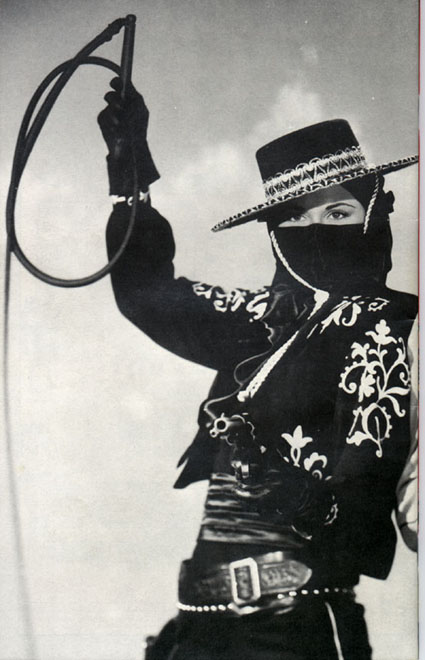
Linda Stirling Unmasked: The Black Whip


AGORA
: Dragged from her chariot by a mob of fanatical vigilante Christian monks, the revered astronomer was stripped naked, skinned to her bones with sharp oyster shells, stoned and burned alive as possibly the first executed witch in history. A kind of purge that was apparently big business back then.


CRITICAL WOMEN HEADLINES

1/1/13

Women Film Critics Circle Awards 2012

ICI-BAS [Down-Below] The male fantasy horror of 'rape romance' on screen. A WFCC Hall Of Shame pick in tribute to the unnamed Indian student and rape murder victim, in the kind of traditional culture where women and girls are pressured to marry their rapists.

BEST MOVIE ABOUT WOMEN

A Royal Affair

BEST MOVIE BY A WOMAN

Zero Dark Thirty

BEST WOMAN STORYTELLER [Screenwriting Award]

Two Days In NY [Julie Delpy]
  
BEST ACTRESS

Anne Hathaway, Les Miserables
   
 BEST ACTOR
 Daniel Day-Lewis, Lincoln
   
BEST YOUNG ACTRESS

Quvenzhanee Wallis, Beast Of The Southern Wild
   
BEST COMEDIC ACTRESS

Maggie Smith, Best Exotic Marigold Hotel

BEST FOREIGN FILM BY OR ABOUT WOMEN

Where Do We Go Now

BEST FEMALE IMAGES IN A MOVIE
Zero Dark Thirty

WORST FEMALE IMAGES IN A MOVIE
**TIE
 Killer Joe
 Think Like A Man
 
BEST MALE IMAGES IN A MOVIE

Lincoln
   
WORST MALE IMAGES IN A MOVIE

Killer Joe
 
BEST THEATRICALLY UNRELEASED MOVIE BY OR ABOUT WOMEN

Hemingway And Gellhorn

BEST EQUALITY OF THE SEXES
Zero Dark Thirty
   
BEST ANIMATED FEMALES
Brave
   
BEST FAMILY FILM
**TIE
Life Of Pi
Rise Of The Guardians

LIFETIME ACHIEVEMENT AWARD

Barbra Streisand

ACTING AND ACTIVISM.AWARD

Sally Field
Field is a dedicated advocate for women's rights. She has served on the Board of Directors of Vital Voices Global Partnership, an international women's NGO, and has co-hosted the Global Leadership Awards. Field suffers from osteoporosis and has become a vocal advocate for women's health issues, encouraging early diagnosis of such conditions through technology, such as bone density scans.
   
*ADRIENNE SHELLY AWARD: For a film that most passionately opposes violence against women **TIE

 Compliance
 The Invisible War

*JOSEPHINE BAKER AWARD: For best expressing the woman of color experience in America
  Middle Of Nowhere
   
*KAREN MORLEY AWARD: For best exemplifying a woman’s place in history or society, and a courageous search for identity

  A Royal Affair

COURAGE IN ACTING [Taking on unconventional roles that radically redefine the images of women on screen]
  Helen Hunt, The Sessions

THE INVISIBLE WOMAN AWARD [Performance by a woman whose exceptional impact on the film dramatically, socially or historically, has been ignored]
  Helen Mirren, Hitchcock
  
 BEST DOCUMENTARY BY OR ABOUT A WOMAN
 Queen Of Versailles
   
 WOMEN’S WORK: BEST ENSEMBLE
 The Best Exotic Marigold Hotel   
 

BEST SCREEN COUPLE
 Moonrise Kingdom: Bill Murray and Frances McDormand
   
*WFCC HALL OF SHAME* 

Bachelorette with Kirsten Dunst, had all sorts of ditzy former high school classmates getting together for the wedding of a girl they used to make fun of. Just stupid on so many levels: male strippers, drinking, general girly silliness.

Ici-Bas [Down Below]. Rape romance: A raped nun (Celine Sallette) falls in love with her rapist.

Skyfall: 'Bond Girl' is only on screen long enough to sell trailers and products like OPI's 'Skyfall Collection' of nail polishes, and gets bumped off at the end of Act II; M turns into a cowering incompetent and gets bumped off at the end of Act III; and the female sharp-shooter in Act I loses her nerve and leaves 'Field Operations' to become an office assistant in Act III. I loved the Sean Connery/James Bond films as a kid. Women got to be part of the action; the Bond Girl was always there to celebrate success at the end. But as a 50th anniversary tribute to the Bond series made in 2012, Skyfall truly broke my heart!

MOMMIE DEAREST WORST SCREEN MOM OF THE YEAR AWARD

 *Helena Bonham Carter
  Les Miserables    


BEST LINE IN A MOVIE 2012
  "...You can't kill the animals in a movie, only the women." - Christopher Walken/Seven Psychopaths

 JUST KIDDING AWARD
:
 Best Male Images In A Movie: Magic Mike


*Please Note: The WFCC Top Ten Hall Of Shame represents the ‘don’t tell me to shut up’ sidebar contribution of individual members, and does not necessarily reflect the opinions of the entire Circle. Also, members may be objecting to particular characters in a film, and not the entire movie. Clarification: If an aspect of the movie is intentionally negative to make a point, rather than offensive, that is not under consideration for this category.

 *ADRIENNE SHELLY AWARD:
Adrienne Shelly was a promising actress and filmmaker who was brutally strangled in her apartment in 2006 at the age of forty by a construction worker in the building, after she complained about noise. Her killer tried to cover up his crime by hanging her from a shower20rack in her bathroom, to make it look like a suicide. He later confessed that he was having a “bad day.” Shelly, who left behind a baby daughter, had just completed her film Waitress, which she also starred in, and which was honored at Sundance after her death.

 *JOSEPHINE BAKER AWARD:
The daughter of a laundress and a musician, Baker overcame being born black, female and poor, and marriage at age fifteen, to become an internationally acclaimed legendary performer, starring in the films Princess Tam Tam, Moulin Rouge and Zou Zou. She also survived the race riots in East St. Louis, Illinois as a child, and later expatriated to France to escape US racism. After participating heroically in the underground French Resistance during WWII, Baker returned to the US where she was a crusader for racial equality. Her activism led to attacks against her by reporter Walter Winchell who denounced her as a communist, leading her to wage a battle against him. Baker was instrumental in ending segregation in many theaters and clubs, where she refused to perform unless integration was implemented.

*KAREN MORLEY AWARD:
Karen Morley was a promising Hollywood star in the 1930s, in such films as Mata Hari and Our Daily Bread. She was driven out of Hollywood for her leftist political convictions by the Blacklist and for refusing to testify against other actors, while Robert Taylor and Sterling Hayden were informants against her. And also for daring to have a child and become a mother, unacceptable for female stars in those days. Morley maintained her militant political activism for the rest of her life, running for Lieutenant Governor on the American Labor Party ticket in 1954. She passed away in 2003, unrepentant to the end, at the age of 93.

9/23/12

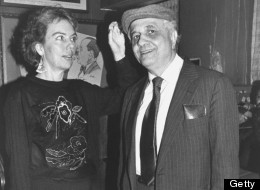
The Man Who Loved Movies - And Women

               
           Andrew Sarris and Molly Haskell

The Man Who Loved Movies (and Women) Andrew Sarris Honored by MoMA, American Academy of Arts & Letters

By Penelope Andrew

'...In 1995, in the journal Film History, Andrew penned "Notes of an Accidental Auteurist." It contains a powerful statement on how much he cared about the portrayals of women on film. "I prefer Michael Powell's The Life and Death of Colonel Blimp to Welles's Citizen Kane. Prefer Welles's The Magnificent Ambersons to Kane. Why? The respective treatments of women."...'

CONTINUE TO READ HUFFINGTON POST ARTICLE HERE

Penelope Andrew writes for The Huffington Post, Bright Lights Film Journal, WestView News, Arts Express Syndicate and Critical Women on Film. Penny Andrew is a member of The Women Film Critics Circle.

8/12/12

Motherhood, Mass Resistance And Children Of Struggle


The Chilean Building [El Edificio De Los Chilenos]

 For women who commit their lives to mass struggle, there is always a choice that men never have to make. Namely to sacrifice the option of motherhood for revolutionary struggle.

But for many of the young women who joined the Revolutionary Left Movement [MIR, Movimiento de Izquierda Revolucionaria] coalition in Chile to rise up against the 1973 bloody repressive coup by General Augusto Pinochet against the Socialist government of Salvador Allende, the choice did not exist.

And as fiercely committed young mothers already fugitives deep into the revolutionary resistance, they were not only torn between the political and personal in ways men never confront. But the parents of these offspring were also faced with the ruthless policy of the CIA-backed Pinochet regime of engaging in the kidnapping of their children as a negotiation tactic to force the surrender of these hunted revolutionaries. Along with the now well documented horrific secret adoptions of those children of the many subsequently slaughtered political martyrs in question.

And the documentary The Chilean Building [El Edificio De Los Chilenos] not only resurrects the simultaneous heartbreaking and inspiring buried history of those children hidden away in other countries by their parents for their safety. But achieves a rare intensity as well, chronicling that turbulent time. Because the filmmaker Macarena Aguilo, just happens to be one of those children back then, who surmounted the enormous challenges of that time.

Kidnapped and disappeared by the CIA when just a preschooler as an unsuccessful bargaining chip to force the surrender of her father in hiding, Macarena was released a month later. But fearful for her future, her father arranged for Macarena to be reunited with her mother already in exile in France. And eventually Macarena joined scores of other politically at-risk Chilean children at a commune set up for them in Havana. Which came to be known as the Chilean Building.


Winner of the Best Documentary at the New York International Latino Film Festival last year, The Chilean Building is an alternately euphoric and solemn collective recollection by many of those young spunky survivors and their parents and fellow comrade guardians, of the 'tremendous invitation' that welcomed them in Cuba. And the unique experience of a society where 'everything Cuba does is for everyone,' and every house belongs to everybody,' in 'a good place for children, because everyone loves them.'

Yet at the same time, the emotionally tragic truth for which neither the children nor parents have been able to achieve closure to this day. Namely, the utopian political dream tasted in Cuba - of a society dissociated from 'consumption, individualism and competition for money.' But necessitating the enormous personal sacrifices of those Chilean parents and children, that in the end left all their lives personally damaged, but bereft of an anticipated legacy that has never been realized in Chile.

The Chilean Building is an impassioned recollection of intimate and collective memory, through difficult testimony, and heartbroken yet politically resolute letters written by parents to their children from afar through those years, and the grown children today who sublimate those traumatic feelings through healing art. Along with moments of tender humor, as when one of them recalls with delight as an only child, being suddenly surrounded by sixty new siblings. And another expressing relief - perhaps regarding his own anticipation of parenthood in a very different, disillusioning world in Chile today - that in the Chilean Building in Cuba, 'I didn't have television to screw up my head.'

And a mother's letter in particular written back then, magnifies and solidifies the sustained resilience of Macarena and those other young hearts and minds:

'Tomorrow you shall begin a path with many other children, and you'll have the loving hands of our comrades to carry you forward. If there's anything I wanted to give you and learn with you, it is to live intensely, to love with your eyes. With a desire to feel and to always move forward, trying to stay true to what we've said. And if I leave you today, it's because that small, honest commitment I gave you urges many of us, hopefully thousands, to go struggle with our comrades in Chile...And that victory shall be for you, for all the children of Chile.'

And no matter what the outcome, in a brokenhearted parent's explanation for the hopefully comprehending mind of a child, it was about a time of 'such monumental craziness, but we tried to do it well. We tried to do everything with our hearts.'

Candid and ironic, replete with raw feelings yet never truly defeatist, The Chilean Building vividly poses solemn questions about the price of struggle, but without ever quite relinquishing political hope. And as one can glean in tentative but miraculous ways as legacy, beyond the scope of this movie, such as in the case of Spanish judge, lawyer, and international jurist, Baltasar Garzón. Who leads the legal team representing Wikileaks and Julian Assange, currently seeking political asylum holed up for months in the Ecuadorian embassy in London, fighting anticipated US prosecution.

Garzón in fact, revolutionized the international justice system two decades ago by issuing an arrest warrant for  Pinochet for crimes against humanity in Chile. For which Pinochet was never in fact brought to justice, but Garzón's actions spearheaded the fight against such impunity in Latin America, and the rest of the world.

The Chilean Building is being released theatrically at The Maysles Cinema in NYC, August 13th through 19th - a Harlem theater devoted to the recognition of documentary film. More information is online at:

Magic-lantern-films.com/the-chilean-building
Mayslesinstitute.org

Prairie Miller

8/10/12

The Cannes Film Festival Reports

"Are you a war correspondent, or wife in my bed?" - Ernest Hemingway 

*LISTEN TO CANNES CLOSING NIGHT CEREMONY REPORT

Ken Loach, upon winning the Jury Prize at Cannes, for a drama about the struggles of unemployed Glasgow youth: This award signifies that cinema "is not just entertainment, it shows us who we are." 

In the first of a series of on location reports, Annette Insdorf is our correspondent at this year's Cannes Film Festival 2012. We are honored to feature her coverage, which will also include breaking news announcing the winners at the end of the Festival.

Annette Insdorf returns to the Cannes Film Festival, providing coverage of the films and events, May 16-27th. Director of Undergraduate Film Studies at Columbia University, and author of the recently-published Philip Kaufman, she tells us about the most anticipated offerings of the world's most celebrated film festival-from American selections Hemingway & Gellhorn, Moonrise Kingdom and Lawless to European titles from masters Bernardo Bertolucci, Alain Resnais, Michael Haneke and Jacques Audiard. She gives a preview of Sean Penn's benefit for Haiti; the large number of documentaries in the Official Selection; and the question of female representation.

LISTEN TO CANNES FILM FESTIVAL REPORT HERE


            Ernest Hemingway and Martha Gellhorn


"I hated Vietnam the most, because I felt personally responsible. It was my own country doing this abomination. I am talking about what was done in South Vietnam to the people whom we, supposedly, had come to save. I'm seeing napalmed children in the hospital, seeing old women with a piece of white sulphur burning away inside of them, seeing the destroyed villages, seeing people dropping of hunger and dying in the streets. My complete horror remains with me as a source of grief and anger and shame that surpasses all the others."

Martha Gellhorn, Atlantic Monthly
 

Professor Insdorf is an internationally renowned educator, and her works are hailed as the definitive texts on their subjects. She has also been a jury member of numerous international film festivals. Professor Insdorf is a member of The Women Film Critics Circle

Reporting from Cannes for over a quarter century, Annette Insdorf previously co-anchored the Festival with Roger Ebert for Bravo and The Independent Film Channel. Her knowledge and insight about cinema, past and present, is a veritable treasure trove of film history and culture. And we're extremely proud to have her as our correspondent reporting from Cannes again this year.

 Stay tuned for continuing features of Arts Express: Expression In The Arts. Airing On WBAI Radio's Pacifica Network and Affiliate Stations. And if you'd like to Express yourself too, you can write to: ArtsExpressradio@gmail.com

READ CANNES FILM FESTIVAL ON LOCATION REPORT HERE

4/8/12

Girls: Sex And The City In A Sea Of Uncertainty


By Winnie Bonelli
 
“Sex and the City” was a fantasy, clothed in designer rags, wealthy boyfriends, and high-profiled, lucrative careers. Taking off the rose colored glasses, HBO’s Girls introduces viewers to an entirely different breed of post-college graduate, one more akin to present reality, on Sunday at 10:30 p.m.
          
Hannah and her trio of best friends are floundering in a sea of uncertainty. Their career goals are battered by economical rough times and a scarcity of job opportunities. And instead of Mr. Big, Hannah’s “friend with benefits” is an eccentric wannabe actor (Adam Driver), who won’t answer her texts, until she’s standing underneath her window.. 
 
Even for viewers who can’t identify with Hannah’s dilemmas, humiliations, and sometimes-bad choices, Girls is a slice of life that generously delivers an equal portion of comedy and angst, laced with graphic sex scenes that bypass filmdom’s discretionary gimmicks.
        
Now meet Hannah’s alter ego – creator/star/writer/director Lena Dunham. Disarmingly real, Dunham still seems a bit befuddled by the attention notoriety brings.
        
Candid in her answers and appearing younger than her 24 years, Dunham confessed, “It’s (Girls) is closely based on my own experience of getting out of college in 2008 and not having a sense of whether I would ever get to do the thing I wanted to do, creative writing, and I was really miserable.

“I was working in a baby clothes store and just excited that I got free cookies in the afternoon. It was a really kind of confusing, frustrating time, and I saw a lot of my friends going through the same thing,” said Dunham, who was supplementing her income by babysitting.

And yes, the Manhattan-born, Brooklyn-reared actress concedes that she grew up watching Sex and the City. Dunham even bought into the propaganda that if she moved to Manhattan she’d have “a really elegant boyfriend and a really incredible shoe closet.” What greeted her instead was a harsh case of reality.

Following that sage advice of writing about what one knows best, the Oberlin College graduate Dunham penned an autobiographic screenplay titled Tiny Furniture. Raised $25,000 by begging and borrowing from family members and friends, with the exception of her grandmother. She continued,

“I was working with a great group of kids, who had gone to NYU. Film kids are really scrappy and sort of have this understanding of how to make a movie by the skin of their teeth. You feel like you have taken a ship hostage, like ‘Everyone’s coming with me,” she laughed. Artist/photographer Laurie Simmons was one of those “hostages” portraying Lena’s mother both on screen and in real life.

Tiny Furniture went on to become the film festival circuit’s darling and pivoted Dunham to indie icon status. It also attracted the attention of Judd Apatow, whose features credits include The Bridemaids. Apatow and Dunham’s friend, Jenni Konner, are now executive producers for Girls.

A little too short and pear-shaped to fit the stereotypical image of a starlet, Dunham swears she quit acting at age 11 after being cast as a bouncing ball in Alice in Wonderland. That changed when she started writing screenplays and the characters were essentially versions of herself. Then she rationed, “I don’t know who else is gonna want to do this. I guess I’ll play it.”

Filming Girls brought her face-to-face with the truth. “I realized that I do get something out of acting that I don’t get out of the rest of the process. It’s cathartic. It’s connected. It’s an adrenaline rush,” she admitted.

So what was grandma’s reaction when she finally saw Tiny Furniture and the first three episodes of Girls?  “My mom said, ‘Dottie,’ she’s like 93, ‘What do you think of the sex scenes?’ She went, ‘Oh, you know, that’s just what they do these days.”

Winnie Bonelli writes for Life & Style Magazine, The Independent [Hamptons], New Jersey Monthly and The Herald News. She is a member of The Women Film Critics Circle.